Introduction
One will discover in this guide the importance of color contrast when selecting ramps for visually impaired dogs. The article explains how visual perception, joint health, and safety intersect in ramp design. Readers will learn practical strategies for choosing high‑contrast colors, evaluating product specifications, and installing ramps securely. By the end of the guide, one will be equipped to make an informed purchase decision and enhance the mobility of a canine companion.
Background/Context
Dogs rely on a combination of vision, scent, and tactile feedback to navigate their environment. When vision is compromised by age, disease, or injury, the ability to distinguish edges diminishes. Ramps that lack sufficient visual cues can cause hesitation, missteps, and joint strain. Research indicates that high‑contrast color combinations improve edge detection for dogs with reduced visual acuity. Consequently, pet owners and designers must consider both material texture and color contrast to create safe access solutions.
Understanding Color Contrast for Visually Impaired Dogs
Contrast is defined as the difference in luminance or hue between adjacent surfaces. For a dog, a dark ramp surface against a light vehicle floor creates a clear visual boundary. The following points summarize why contrast matters:
- Edge detection: A distinct color boundary highlights the start and end of the ramp, reducing uncertainty.
- Confidence building: When a dog can see the ramp clearly, it is more likely to approach without hesitation.
- Joint protection: Reduced hesitation minimizes sudden jumps that can stress hips, knees, and spine.
- Training efficiency: Consistent visual cues accelerate the learning process for new ramps.
Choosing Effective Colors
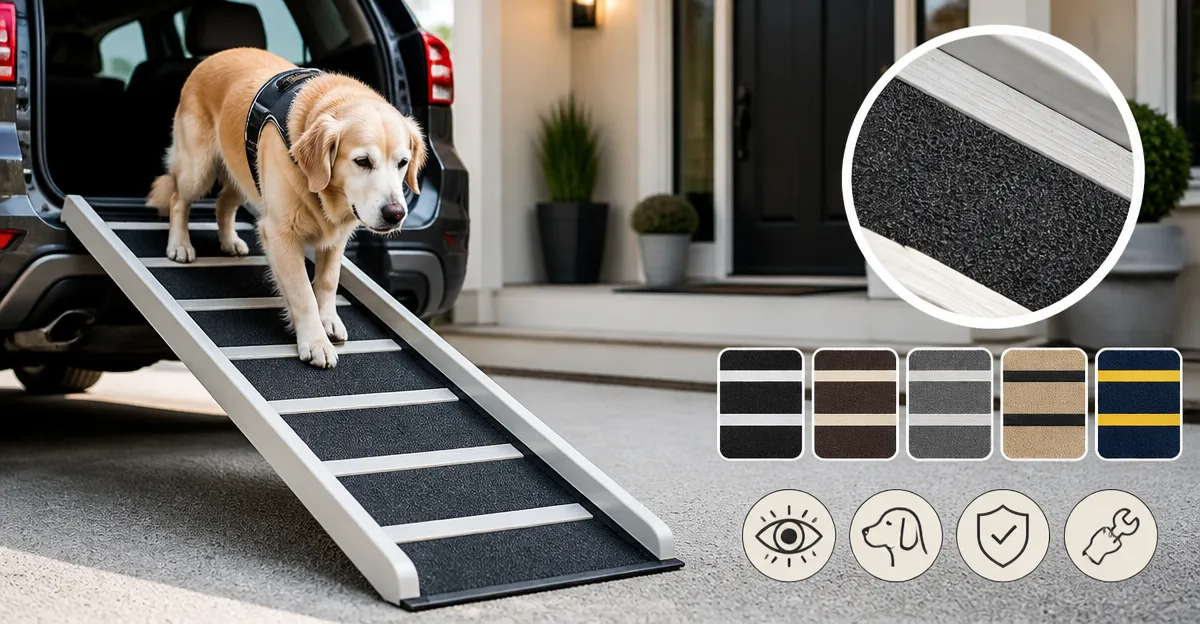
When selecting a ramp, one should prioritize color pairs that maximize luminance difference. Dark gray or black surfaces paired with bright yellow, orange, or white edges provide optimal contrast. If the ramp surface itself is neutral, adding high‑visibility tape or reflective strips along the edges can achieve the same effect. It is advisable to test the ramp under the lighting conditions typical of the vehicle or home environment, as ambient light influences perceived contrast.
Product Recommendations for High‑Contrast Ramps
Several commercially available ramps already incorporate high‑visibility design elements. The following products exemplify strong construction, appropriate dimensions, and the ability to accommodate contrast enhancements.
HerCcreta Wigge Dog Car Ramp
The HerCcreta Wigge Dog Car Ramp offers a 63‑inch length and a 17‑inch width, providing a gentle incline that reduces joint strain. Its high‑grade aluminum frame ensures stability up to 250 lb, while the non‑slip gray carpet surface can be complemented with bright edge tape for added contrast. The ramp folds four times to a compact 17.5 × 17 × 5.5 inches, weighing 13.5 lb, making storage convenient. With a rating of 4.3 / 5.0 from 1,889 reviews and a price of $79.97, it balances durability and affordability.
PetSafe Happy Ride Folding Dog Ramp
The PetSafe Happy Ride Folding Dog Ramp measures 62 inches long and 16 inches wide, supporting dogs up to 150 lb. Its high‑traction treads are made of a sand‑paper‑style surface that can be overlaid with colored grip strips for contrast. The ramp folds in half, locks with a safety latch, and weighs only 10 lb, facilitating transport. It holds a 4.1 / 5.0 rating from 15,006 reviews and is priced at $59.99, representing a budget‑friendly option.
PetThem Extra‑Long Dog Car Ramp
The PetThem Extra‑Long Dog Car Ramp extends to 71 inches, offering the gentlest slope among the featured products. Its high‑traction fabric rug with a Loofah‑like texture provides excellent grip, and owners can attach bright reflective tape to the edges for enhanced visibility. The ramp supports up to 250 lb, folds to a compact 17.2 × 5 × 19 inches, and weighs 19 lb. With a 4.4 / 5.0 rating from 1,304 reviews and a price of $94.99, it is suited for larger or senior dogs.
Pawaboo Extra Wide Dog Car Ramp
The Pawaboo Extra Wide Dog Car Ramp measures 74 inches in length and 20 inches in width, delivering ample surface area for broad‑shouldered breeds. Its non‑slip textured PVC surface can be paired with high‑visibility strips to create a clear visual guide. The ramp holds up to 250 lb, folds to 37 × 19.7 × 2.6 inches, and weighs 21 lb. It carries a 4.4 / 5.0 rating from 2,229 reviews and is priced at $99.95, making it ideal for large, senior dogs.
HerCcreta Wigge Extra Wide Dog Ramp
The HerCcreta Wigge Extra Wide Dog Ramp combines a 71‑inch length with a 20‑inch width, delivering a spacious and gentle ascent. Its gray carpet surface can be enhanced with bright edge markers, and the aluminum frame supports up to 270 lb. The ramp folds four times to 19.7 × 19.2 × 6 inches and weighs 20 lb. With a 4.3 / 5.0 rating from 1,889 reviews and a price of $119.98, it represents a premium choice for owners seeking maximum width and load capacity.
Comparison and Selection Guide
| Product | Length | Width | Weight (lb) | Capacity (lb) | Price (USD) | Rating |
|---|---|---|---|---|---|---|
| HerCcreta Wigge Dog Car Ramp | 63 in | 17 in | 13.5 | 250 | 79.97 | 4.3/5 (1,889) |
| PetSafe Happy Ride Folding Dog Ramp | 62 in | 16 in | 10 | 150 | 59.99 | 4.1/5 (15,006) |
| PetThem Extra‑Long Dog Car Ramp | 71 in | 17.2 in | 19 | 250 | 94.99 | 4.4/5 (1,304) |
| Pawaboo Extra Wide Dog Car Ramp | 74 in | 20 in | 21 | 250 | 99.95 | 4.4/5 (2,229) |
| HerCcreta Wigge Extra Wide Dog Ramp | 71 in | 20 in | 20 | 270 | 119.98 | 4.3/5 (1,889) |
When selecting a ramp, one should consider the dog’s weight, height of the vehicle entry point, and the desired width for stability. For small to medium dogs, the PetSafe Happy Ride offers a lightweight solution. Larger or senior dogs benefit from the extra length of the PetThem or Pawaboo models, while owners of very wide‑shouldered breeds may prefer the extra‑wide HerCcreta Wigge version.
Best Practices & Installation Tips
- Measure the vehicle’s entry height and calculate the required ramp length to achieve a slope of no more than 18‑20 degrees.
- Apply high‑visibility adhesive tape or reflective strips along the ramp edges before first use. Ensure the tape is securely pressed to prevent peeling.
- Secure the ramp to the vehicle using the provided straps, buckles, or metal mountaineering buckles. Verify that the ramp does not shift under weight.
- Inspect the non‑slip surface for wear before each use. Replace worn carpet or fabric with a fresh high‑traction overlay if necessary.
- Introduce the ramp gradually: allow the dog to sniff, then encourage ascent with treats and a calm voice. Repeat short sessions until confidence is built.
- Store the ramp folded in a dry location to prevent moisture damage. Keep the handle clean and free of debris.
Frequently Asked Questions
1. How does color contrast improve ramp safety for a blind or partially sighted dog?
Contrast creates a visual boundary that the dog can detect even with limited vision, reducing hesitation and the risk of missteps.
2. What color combinations provide the highest contrast?
Dark surfaces paired with bright yellow, orange, white, or reflective materials offer the greatest luminance difference under most lighting conditions.
3. Can I add contrast to a ramp that already has a neutral color?
Yes, adhesive high‑visibility tape, reflective strips, or paint can be applied to the edges without compromising the ramp’s structural integrity.
4. How do I determine the appropriate ramp length for my vehicle?
Measure the height from the ground to the vehicle floor, then select a ramp that provides a slope of approximately 18 degrees; longer ramps yield gentler slopes.
5. Is it safe to use a ramp outdoors in rainy conditions?
All featured ramps incorporate non‑slip surfaces that maintain traction when wet, but adding extra anti‑slip tape and ensuring proper drainage will further enhance safety.
6. What weight limits should I consider for senior dogs?
Choose a ramp with a capacity at least 20‑30 lb above the dog’s weight to account for dynamic loads during movement.
Conclusion
One now understands that color contrast, ramp dimensions, and material quality jointly determine the safety of canine access solutions. By selecting a ramp with appropriate length, width, and load capacity, and by enhancing visual cues with bright edge markings, owners can reduce joint stress and improve confidence for visually impaired dogs. The comparative data and installation guidelines provided in this guide empower one to make a well‑informed purchase and to maintain the ramp for long‑term use.
Products Featured in This Guide
HerCcreta Wigge Dog Car Ramp
Price: $79.97 | Rating: 4.3/5 (1,889 reviews)
Featured for its sturdy aluminum frame, four‑fold portability, and non‑slip carpet surface that can be enhanced with high‑visibility tape.
PetSafe Happy Ride Folding Dog Ramp
Price: $59.99 | Rating: 4.1/5 (15,006 reviews)
Featured for its lightweight 10 lb design, high‑traction treads, and easy half‑fold storage, making it ideal for travel.
PetThem Extra-Long Dog Car Ramp
Price: $94.99 | Rating: 4.4/5 (1,304 reviews)
Featured for its 71‑inch gentle slope, premium aluminum alloy construction, and fabric rug surface that supports added contrast accessories.
Pawaboo Extra Wide Dog Car Ramp
Price: $99.95 | Rating: 4.4/5 (2,229 reviews)
Featured for its 20‑inch width, all‑metal construction, and non‑slip mesh surface that can be paired with reflective edge strips.
HerCcreta Wigge Extra Wide Dog Ramp
Price: $119.98 | Rating: 4.3/5 (1,889 reviews)
Featured for its premium 71‑inch length, 20‑inch width, and 270 lb capacity, offering maximum stability for large, senior dogs.
Frequently Asked Questions
Why is color contrast important for ramps used by visually impaired dogs?
High‑contrast colors make ramp edges more visible, reducing hesitation and missteps that can strain a dog's joints.
What color combinations provide the best contrast for dogs with reduced vision?
Pairs like black on yellow, dark brown on light beige, or navy on white create strong luminance differences that dogs can detect easily.
How does ramp texture complement color contrast for visually impaired dogs?
Rough or non‑slip surfaces give tactile cues, helping dogs confirm the ramp’s location even if visual cues are limited.
What should pet owners look for in product specifications when buying a ramp for a visually impaired dog?
Check for listed color contrast, non‑slip material, weight capacity, and secure mounting hardware.
How can owners install a ramp to maximize safety for a visually impaired dog?
Place the ramp on a stable surface, secure it with brackets or straps, and ensure the high‑contrast edge is clearly visible from both sides.